
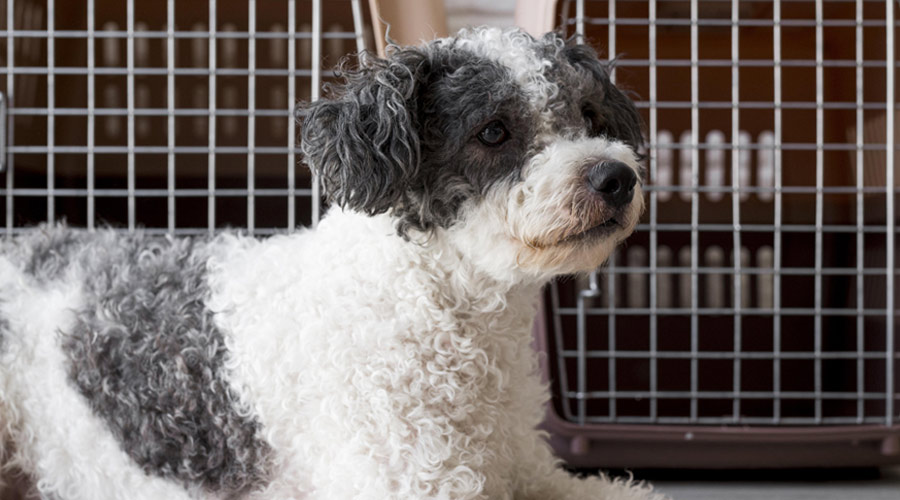
If you’re moving your pet overseas, you’ll quickly come across the term ‘IATA-compliant carrier’.
Airlines won’t let pets travel in just any crate – it must meet strict international standards.
Keep reading as we explain exactly what an IATA-compliant carrier is and how to choose the right one for your furry friend.
What is an IATA-Compliant Carrier?
An IATA-compliant carrier is simply a pet travel crate that follows the rules set out by the International Air Transport Association, typically known as IATA. To be accepted by airlines, the crate must be sturdy, have proper ventilation, a secure door, food and water bowls inside and be big enough for your pet to stand, turn and lie down.
Reasons Airlines Require IATA-Compliant Carriers
Airlines follow the IATA standards because it’s the safest way to transport animals by air. A compliant animal carrier protects your pet, airline staff and even other passengers.
Here’s why the rules are so important:
- A strong, secure crate prevents escapes and keeps pets safe during loading, turbulence and landing.
- Providing proper ventilation, food and water bowls and sufficient space means your pet can travel more comfortably with less stress.
- The IATA guidelines are recognised by airlines around the world, so the same standards apply whether you’re flying from the UK to Australia, the USA or anywhere else.
- Using the right carrier avoids last-minute problems at the airport. Please note that if your crate isn’t compliant, the airline might refuse to fly your pet.
Features of an IATA-Compliant Carrier for Pet Travel
Not every pet crate is suitable for flying. Here are the main features to look for when buying the right one:
Size and space
Your pet must be able to stand up without touching the top, turn around easily and lie down in a natural position.
Food and water bowls
Fixed containers must be attached inside the carrier and accessible from outside, so staff can refill them without opening the door.
Strong material
Carriers must be rigid and durable, usually made from plastic, metal or wood. Soft-sided or collapsible crates are not IATA-compliant for cargo travel.
Secure door
The door must be made in accordance with the approved requirements and have suitable fastenings that prevent your pet from pushing it open from the inside.
Food and water bowls
Fixed containers must be attached inside the carrier and accessible from outside, so staff can refill them without opening the door.
Absorbent bedding
A blanket, towel or other absorbent material should line the bottom to keep your pet comfortable and dry.
Ventilation
At least three sides of the carrier must have ventilation holes to allow steady airflow.
Leak-proof base
The bottom of the carrier must be solid to prevent spills or leaks from occurring.
Choosing the Right Carrier for Your Pet
Even with IATA guidelines in place, selecting the right carrier can feel overwhelming when you’re preparing for an international move with a pet.
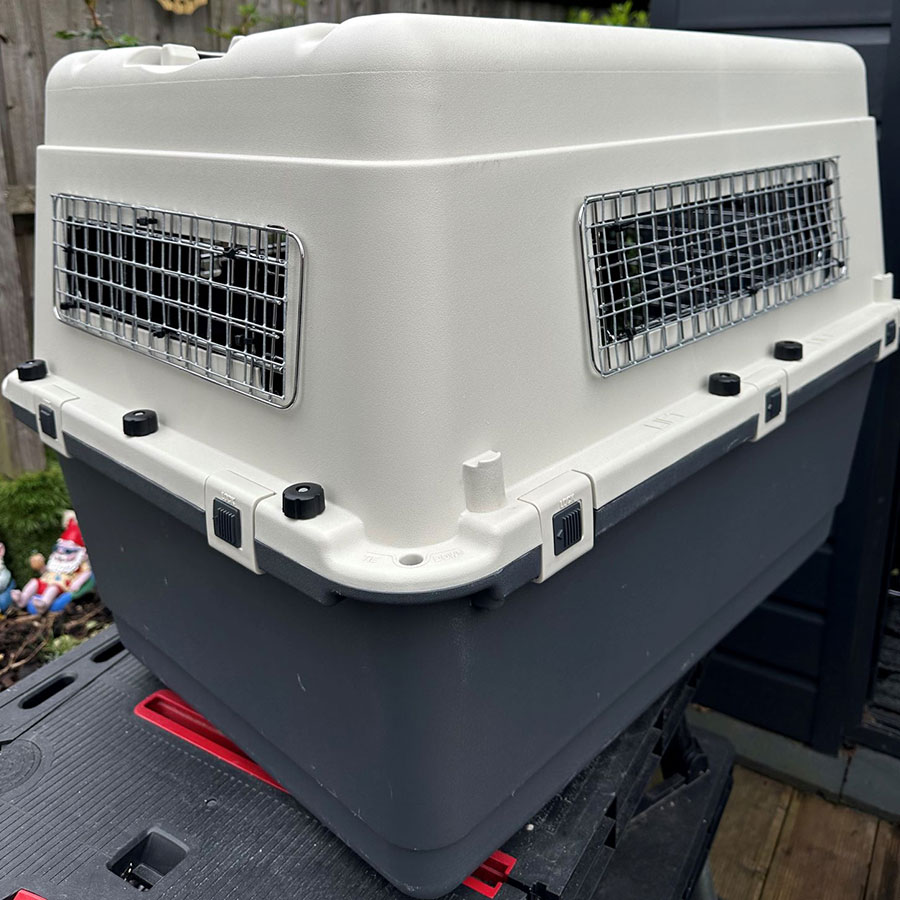
Rigid plastic containers
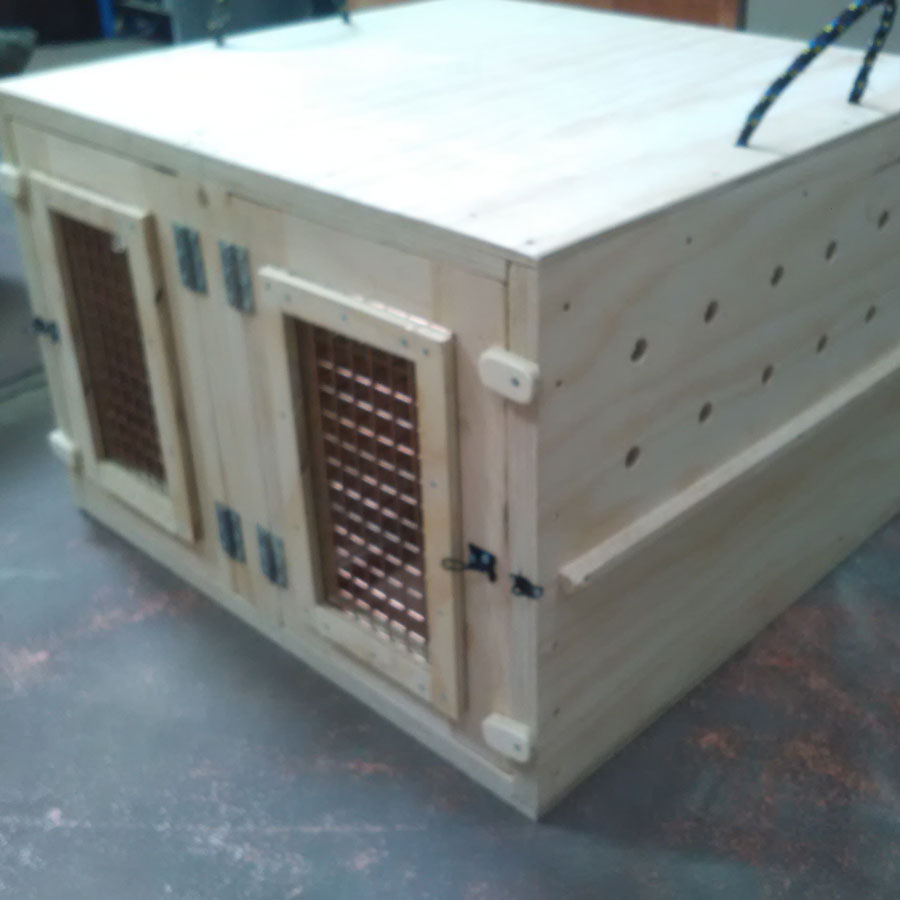
Wooden containers
The right crate depends on your pet’s size, breed and the specific requirements of your airline. Here’s how to get it right:
- Measure your pet properly – Start by measuring your pet from nose to tail and from the floor to the tips of their ears. Airlines use these dimensions to determine the minimum carrier size.
- Check airline rules – Some airlines add their own conditions on top of IATA standards, so it’s worth double-checking before you buy.
- Consider your pet’s breed and needs – Snub-nosed breeds, larger dogs or particularly anxious pets may need special consideration when it comes to size and ventilation.
- Quality over cost – A cheap crate might look appealing, but if it doesn’t meet the standards, it won’t be accepted and it won’t keep your pet safe.
- Get expert help – Using a professional pet export company takes the guesswork out of the process. They’ll advise on the correct carrier size and type (or provide them) to ensure compliance with IATA and airline rules and help you avoid expensive mistakes at the airport.
Mistakes to Avoid
Many pet owners buy a carrier that looks fine at first glance, only to discover at the airport that it doesn’t meet the rules. That can mean extra costs, delays or, at worst, your pet being refused travel.
Here are some pitfalls to watch out for:
- Carrier too small for the pet
- Too large and unsafe for travel
- Using a soft-sided, wire mesh or collapsible crate
- Carrier not made from rigid, approved material
- Inadequate ventilation (less than three sides)
- Door not securely locking
- Using fasteners not airline-approved
- Missing or unsecured food and water bowls
- Bowls not accessible from the outside
- No absorbent bedding inside
- Bedding made from unsafe or inappropriate material
- Base of carrier not leak-proof
- Wheels not removed or locked before travel
- Carrier in poor condition (damaged, cracked or worn)
- Wrong size crate ordered due to poor measurements
- Not checking airline-specific requirements
- Carrier not labelled with ‘Live Animals’ and directional arrows
- Missing owner contact details on the carrier
- Pet not acclimatised to the carrier before travel
- Carrier modified in a way that voids compliance
- Non-IATA-compliant brand or model used
- Using a second-hand crate without verifying compliance
Confident Pet Travel Starts with an IATA-Compliant Carrier
By investing in an IATA-compliant carrier, you’re meeting airline requirements and giving your pet the safest, most comfortable trip you can.
If you’re unsure about sizing, airline rules or which crate to buy, working with a professional pet export company takes away the guesswork. With the right advice and preparation, you can focus on the most exciting part — reuniting with your beloved pet at your destination.
Ready to explore...