
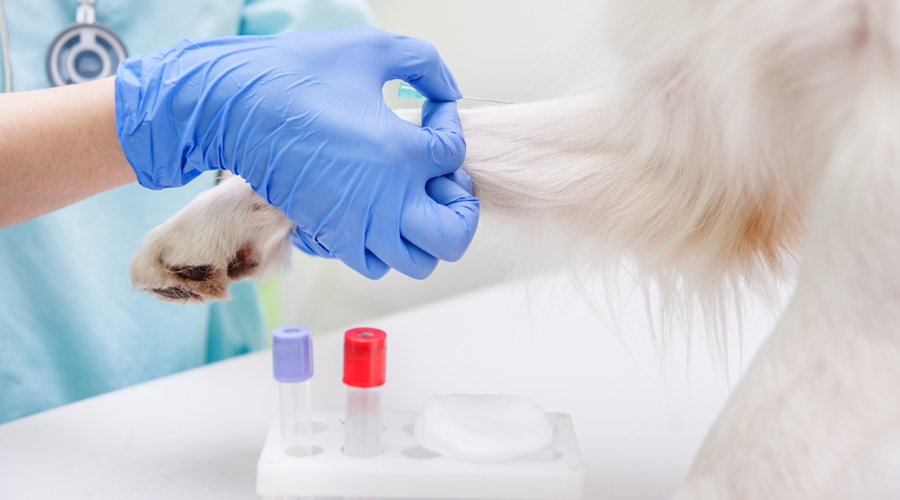
Did you know that being considered rabies-free in the UK doesn’t automatically exempt your pet from rabies testing when travelling overseas?
Many countries require pets travelling from the United Kingdom to take a rabies test before they will let them in. And, unfortunately, rabies requirements can add a surprising amount of time to your pet’s relocation timeline.
We’ll explain when a rabies blood test is required, what the result means, timing and where the test fits into the pet relocation process.
Does My Pet Need a Rabies Blood Test to Travel From the UK?
Not every pet travelling from the UK needs a rabies blood test. It depends on the entry rules of the country you’re taking your pet to. Some destinations require a rabies antibody result as part of the import process, while others accept a valid rabies vaccination without a blood test.
What a Rabies Blood Test Measures
After a rabies vaccination, your pet’s immune system should produce antibodies against the virus.
The blood test measures those antibodies to confirm that the vaccine has produced the response required under your new country’s import rules.
You might hear your vet or pet relocation company call this a rabies titre test, rabies antibody test or Rabies Neutralising Antibody Titre Test — commonly known as RNATT. These are different names for testing the rabies antibody level after vaccination.
Results are recorded in International Units per millilitre (IU/ml), with many countries requiring a minimum result of 0.5 IU/ml for rabies antibody testing for pet entry. If your pet’s result falls below the required level, unfortunately they will not meet that part of the import requirements and further vaccination and testing may be needed before they can travel to their new home.
Another thing to consider is that countries with approved-laboratory requirements will only accept results from laboratories they recognise. Sending the sample to the wrong laboratory could mean having to repeat the test all over again, even if the antibody result itself was high enough. Your pet relocation company should confirm the accepted laboratory requirements before taking the blood sample.
Timing the Blood Test After Rabies Vaccination
Some destinations require a set waiting period between your pet’s rabies vaccination and blood test, which is usually at least 30 days, depending on the country.
The wait gives your pet time to develop enough antibodies for the test. The date must also meet the destination’s import rules. If a 30-day interval is required, for example, a sample taken on day 29 will not be accepted even if the antibody result is high enough.
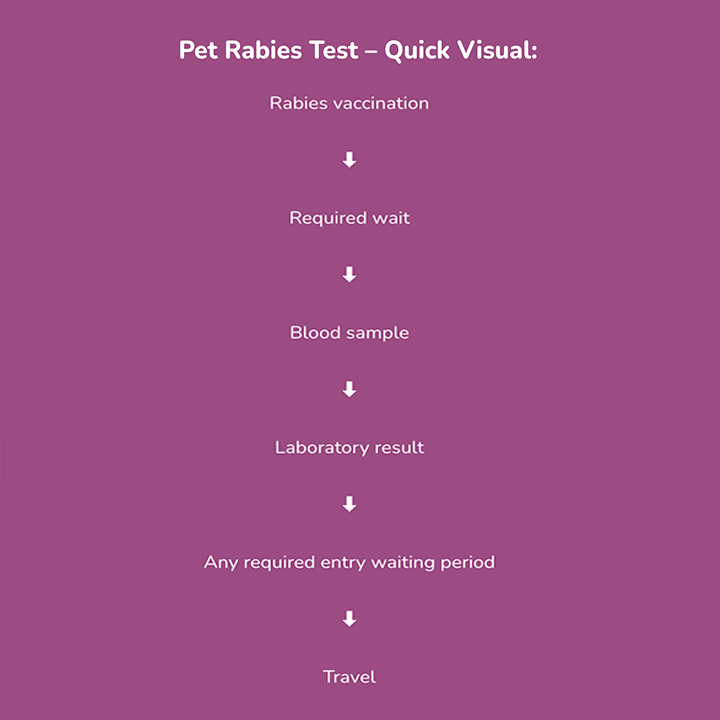
Please note: Passing the blood test does not always mean your pet can travel straight away. For destinations with an additional waiting period, this can add several months to the pet relocation timeline.
Rabies Blood Test Rules When Travelling From the UK
Rabies blood test requirements are set by the country your pet is entering, and the UK is classified differently from one destination to another. This means a test that is compulsory for a move to Australia may not be required at all for another country.
Here is a breakdown of Rabies test requirements for popular destinations:
🇦🇺 Australia
Australia places the UK in its Group 3 category for pet imports. Dogs and cats travelling from the UK need a Rabies Neutralising Antibody Titre Test, with a result of at least 0.5 IU/ml.
The Australian Government recommends waiting about three to four weeks after a first rabies vaccination before taking the blood sample. Your pet must then remain in an approved country for at least 180 days from the date the RNATT sample arrives at the laboratory before it can be exported to Australia, where it must quarantine.
Official guidance: Australian Government Department of Agriculture, Fisheries and Forestry
🇨🇦 Canada
Canada currently recognises the United Kingdom as rabies-free for domestic dogs and cats, meaning a rabies antibody blood test is not part of the standard entry requirements for a pet travelling from the UK.
The exact paperwork you need will still depend on your pet’s age and circumstances, so check the Canadian requirements for your individual move before travelling.
Official guidance: Canadian Food Inspection Agency
🇺🇸 USA
Dogs travelling from the UK to the USA usually don’t need a rabies blood test if they’ve been only in countries considered dog-rabies-free or low-risk in the six months before arrival.
The rules change if your dog has spent time in a country the US classifies as high risk for dog rabies, so their recent travel history matters, as does where the final journey begins.
Official guidance: US Centers for Disease Control and Prevention
🇯🇵 Japan
Japan currently doesn’t include the UK among its designated rabies-free regions, so dogs and cats travelling from the UK follow its requirements for non-designated regions.
This process includes rabies vaccination and an antibody test with a result of at least 0.5 IU/ml. Japan also requires a 180-day wait from the date the blood sample is taken before arrival. Arriving before that period has finished can result in the pet being held in quarantine for the remaining days.
Official guidance: Japan Animal Quarantine Service, Ministry of Agriculture, Forestry and Fisheries
🇸🇬 Singapore
Singapore treats the UK differently.
The UK is currently a Schedule I country/region under Singapore’s pet import system. Dogs and cats travelling directly from the UK under these conditions do not require a rabies vaccination or rabies serology test for entry.
This is a good example of why you should check the rules or contact a professional pet shipping company for your specific journey, rather than assuming every country that controls rabies requires a blood test for UK pets.
Official guidance: Singapore Animal & Veterinary Service
🇳🇿 New Zealand
New Zealand introduced a new Import Health Standard for cats and dogs on 1 July 2026. Under these new rules, the UK is a Category 3 country, which New Zealand defines as a country where rabies is absent or well controlled.
That means pets flying from the UK must meet New Zealand’s Category 3 rabies requirements, which include rabies vaccination and a Rabies Neutralising Antibody Titre Test.
A transition period currently allows pets to enter under current standards, but from 1 April 2027, all cats and dogs entering New Zealand must meet the new 2026 standard.
Official guidance: New Zealand Ministry for Primary Industries
🇦🇪 UAE
The UAE requires pets to meet its rabies vaccination rules, but pets travelling from the UK are currently exempt from the Rabies Serum Neutralisation Test required for pets arriving from certain other countries.
So you shouldn’t assume that moving to a country with strict rabies controls automatically means your pet will need a blood test.
Official guidance: Ministry of Climate Change and Environment
Plan Your Pet’s Rabies Test Before You Set a Travel Date
If you’re still unsure which rules apply, contact the experts at a reliable pet relocation company, who can confirm the testing requirements and timing for your pet relocation, so the vaccination, blood test and travel date are arranged in the correct order and you avoid any holdups during your big move.